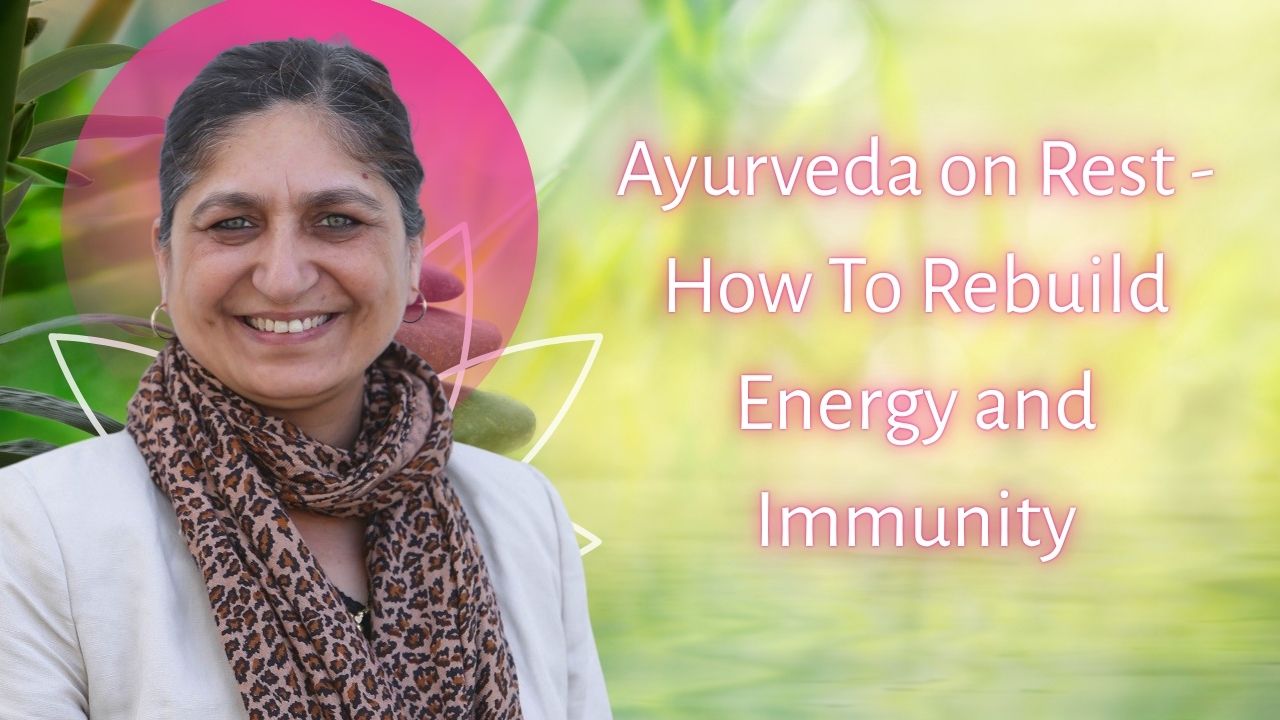
How to Rebuild Energy and Immunity Naturally
We are sleeping more yet feeling more exhausted. That contradiction should concern us. Many people today get seven or eight hours of sleep and still wake up heavy, foggy, or depleted. They eat reasonably well. They try to exercise. They manage their responsibilities. And yet something feels “off”. Ayurveda offers a simple but profound insight. Sleep is not the same as restoration. Rest is not just the absence of activity. It is a biological state in which the body shifts from survival mode into repair mode. And in modern life, that shift is becoming increasingly rare.
https://youtu.be/7jKGylmhKXg
Rest Is One of the Three Pillars of Health
In Ayurveda, health stands on three pillars:
- Food.
- Rest.
- Wise use of energy.
Most of us pay great attention to food. We research ingredients, track nutrients and follow dietary trends. We also focus on productivity. We optimise time, measure output and strive to achieve more. But rest has quietly moved to the bottom of the priority list. Ayurveda never placed it there. Rest is central because without it, the body cannot rebuild. Digestion cannot stabilise. Immunity cannot strengthen. The mind cannot settle. When rest becomes irregular or shallow, vitality gradually declines.
What Happens When We Do Not Fully Rest
The human nervous system is designed to alternate between activation and restoration. When we recognise threat or urgency, the body releases stress hormones such as cortisol and adrenaline. This is useful in short bursts. It sharpens focus and prepares us to act. But when this activated state becomes constant, through deadlines, screens, traffic, notifications and continuous mental engagement, the body adjusts to alertness.
In that state, repair is deprioritised. Digestion becomes inconsistent. Sleep becomes lighter. Inflammation increases. Immunity weakens. You may technically be asleep at night, but if your nervous system has not shifted into a deep parasympathetic state, true repair does not occur. This is why many people wake up tired even after sleeping. The body has not truly switched off.
The Ayurvedic View – When Rhythm Is Lost
Ayurveda describes this pattern through the concept of imbalance in movement. The energy that governs movement and the nervous system is known as Vata. When Vata becomes excessive, through speed, overstimulation and irregular routine, internal rhythms become disturbed.
Symptoms may include:
- Anxiety
- Insomnia
- Dryness
- Digestive irregularity
- Feeling scattered or ungrounded
Ayurveda teaches that like increases like. A life filled with constant movement, stimulation and irregularity increases internal instability. The treatment is not more stimulation. The remedy is rhythm. Stillness provides the grounding counterbalance to excess movement of vata. It allows the body to rebuild what has been depleted.
Rejuvenation Is a Daily Process
Rejuvenation in Ayurveda is not a luxury treatment. It is meant to happen every day. Your body is constantly regenerating. Cells repair. Hormones recalibrate. Tissues renew. The immune system recalculates its responses. But this renewal requires safety. When the body perceives threat, it prioritises survival over restoration. You cannot deeply digest in stress. You cannot repair tissue in stress. You cannot rebuild vitality in stress. True rest is the state in which the body feels safe enough to heal.
Why Sleep Alone Is Not Always Enough
Sleep is essential. But sleep does not automatically equal restoration. If you go to bed overstimulated, mind racing, breath shallow, muscles tense, your system may remain in low-level activation through the night. You may be unconscious, but not fully regulated. This is why conscious rest matters. Practices like slow breathing, reducing evening stimulation, mindful transitions between activities and guided relaxation help the nervous system shift into parasympathetic dominance. When we create intentional moments of stillness during the day, sleep at night becomes deeper and more restorative. Rejuvenation becomes rhythmic rather than accidental.
Rest Builds Immunity and Emotional Stability
Ayurveda describes vitality through the concept of Ojas, the subtle essence of strength and resilience. When Ojas is strong, you feel steady, grounded and less reactive. Immunity functions well. Patience is available. Clarity remains accessible even under pressure. Modern research mirrors this observation. Chronic stress dysregulates cortisol, increases inflammatory markers and reduces immune efficiency. But consistent restorative practices reverse this pattern gradually.
When rest improves:
- Mood stabilises.
- Reactivity decreases.
- Focus improves.
- Cravings reduce.
- Energy becomes more even.
These changes are not dramatic overnight transformations. They are gradual recalibrations. The body knows how to heal. It simply requires the right conditions. Rest provides those conditions.
What Stillness Can Look Like in Daily Life
Stillness does not require retreating from life. It can begin with small adjustments:
- Sleeping at similar times each night.
- Reducing screen exposure before bed.
- Eating without multitasking.
- Taking short pauses between tasks.
- Allowing a few minutes of conscious breathing.
These practices may appear simple. But the nervous system responds strongly to rhythm and predictability. Consistency signals safety. Safety allows repair. Repair rebuilds vitality.
Reframing Rest
Many people quietly worry: “If I slow down, will I fall behind?” But exhaustion does not create excellence. It creates error. It creates irritability. It creates burnout. Rest improves decision-making. Rest improves creativity. Rest improves communication. Stillness is not the opposite of productivity. It is the foundation of sustainable productivity. Ayurveda understood this long before modern neuroscience confirmed it.
A Gentle Beginning
You do not need to transform your entire life overnight. Begin with one protected moment of rest. Turn off stimulation slightly earlier. Pause before responding. Take five slow breaths before sleep. Do not aim for perfection. Aim for rhythm. Rejuvenation is built in consistency. In a world that celebrates constant doing, choosing stillness is a quiet act of intelligence. Rest is not weakness. It is biological wisdom. And when honoured regularly, it does not simply help you feel better. It helps you become steadier, clearer and stronger, from the inside out.